Dayforce Blog: Configuration, Integration & Payroll Guides
Practical guidance for HRIS managers navigating Dayforce configuration, optimization, and integrations.
New here? Start with our guides on Dayforce integration services, Dayforce HCM consulting, Dayforce consulting services, and choosing Dayforce consulting experts.

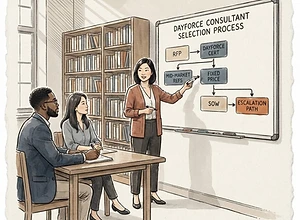
How to Choose a Dayforce Consultant for a Mid-Market Implementation
Hiring a Dayforce consultant is a buyer's market — if you know what to screen for. Here's what separates a Dayforce consultant who fixes your system from one who bills against it.
Read more →
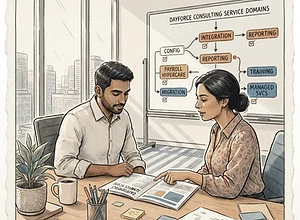
What Dayforce Consulting Services Actually Cover (and What They Don't)
Dayforce consulting services is a broad label that means very different things depending on who's selling. Here's what's actually in scope, what isn't, and how to buy it without overpaying.
Read more →
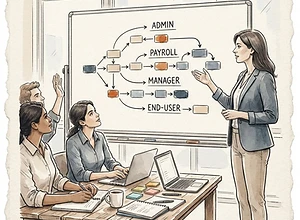
Dayforce Admin Training: Building Internal Capability That Lasts
Most Dayforce training doesn't stick because it's generic. Here's how role-based Dayforce admin training builds internal capability that actually lasts past go-live.
Read more →
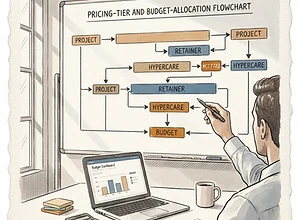
Dayforce Consulting Cost & Pricing: What Mid-Market Companies Should Budget
Dayforce consulting cost is the question every mid-market buyer asks first — and most firms won't answer without a discovery call. Here's what Dayforce consulting actually costs and how to budget for it.
Read more →

Dayforce Configuration Support: Fixing the Setup That's Holding You Back
Most Dayforce problems aren't bugs — they're configuration that was never finished or done wrong. Here's how Dayforce configuration support fixes the setup holding your team back.
Read more →
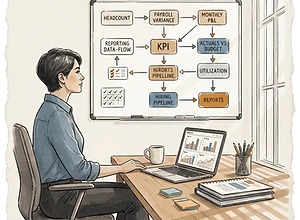
Dayforce Reporting Help: How to Get the Reports You Actually Need
Dayforce reporting is where most mid-market teams get stuck — reports take hours to build and still don't pull the right data. Here's how to get reporting help that actually fixes it.
Read more →
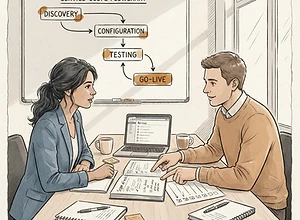
Dayforce Consulting Services: What Mid-Market Companies Should Expect
Dayforce consulting services vary widely in scope, pricing, and quality. This guide covers what mid-market companies should expect — and how to tell good consulting from generic advice.
Read more →
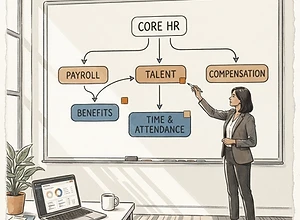
Dayforce HCM Consulting: A Mid-Market Guide to Human Capital Management
Dayforce HCM consulting covers more than payroll — it spans workforce, talent, benefits, and reporting. Here is how mid-market companies should scope and structure HCM work in Dayforce.
Read more →
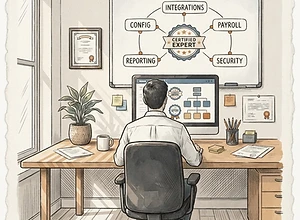
How to Choose Dayforce Consulting Experts for Your Implementation
Dayforce consulting experts are not interchangeable. This guide covers what actual Dayforce expertise looks like and how mid-market companies can evaluate a consultant before signing on.
Read more →
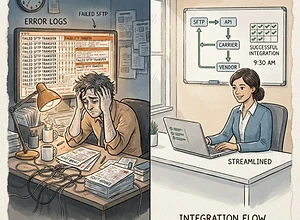
Dayforce Integration Services: Connecting Payroll, HRIS, and Third-Party Systems
Dayforce integrations are where most mid-market implementations leak time and money. This guide covers SFTP feeds, API connections, and the integration patterns that hold up through every payroll cycle.
Read more →

Dayforce Integration Errors: How to Troubleshoot and Fix Failing Integrations
Dayforce integration errors fail silently on a schedule. This guide covers the most common failure modes for SFTP feeds, Integration Studio exports, and webhooks — and how to catch them before they touch employee financial data.
Read more →
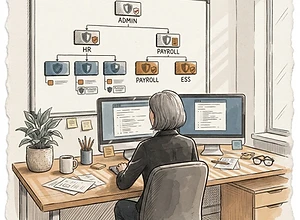
Dayforce Security Roles and Permissions: A Mid-Market Configuration Guide
Dayforce security roles and permissions are the foundation of who can see what and do what — and one of the most common sources of post-go-live problems. This guide covers how roles work, how to design them, and the configuration mistakes that create risk.
Read more →

When to Hire a Dayforce Consultant: 7 Warning Signs Your System Needs Expert Help
Most companies wait too long to hire a Dayforce consultant — until manual workarounds, unresolved support tickets, and silent integration failures have compounded into real payroll problems. Here are the 7 warning signs that tell you it's time to bring in external Dayforce expertise.
Read more →
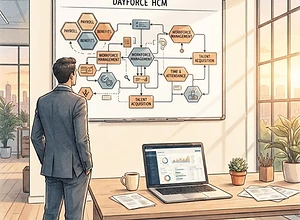
Dayforce Consultant Guide: What Companies Need to Know Before Hiring
A Dayforce consultant implements, configures, troubleshoots, and optimizes the Dayforce HCM platform for companies that use it. This guide covers what they do, when your company needs one, what to look for, and what it costs — written for mid-market HRIS and payroll leaders evaluating external Dayforce expertise.
Read more →

How to Hire a Dayforce Consultant: A Mid-Market Buyer's Guide
Finding the right Dayforce consultant means evaluating module-specific experience, mid-market fit, pricing transparency, and hands-on configuration depth. This buyer's guide covers what to look for, what questions to ask, and what red flags to avoid — for mid-market companies hiring external Dayforce expertise.
Read more →

Dayforce Consultant vs. Dayforce Support: Why Your Tickets Go Unanswered
Dayforce support triages tickets — they don't fix configuration. When your ticket says "working as designed," it means your configuration is wrong and support can't help. Here's why your tickets go unresolved and when a Dayforce consultant is the path that actually fixes the problem.
Read more →
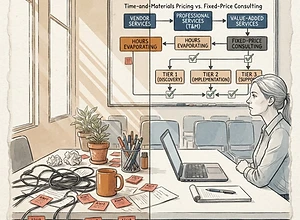
Dayforce Professional Services & VAS Pricing: A Mid-Market Buyer's Guide
Dayforce's Professional Services and Value-Added Services (VAS) are priced on time-and-materials for mid-market buyers — and the billing model itself is what produces the cost surprises. This guide walks through how PS/VAS is typically contracted and staffed, where hours tend to evaporate without producing equivalent value, and what a fixed-price consulting + hypercare engagement looks like for the same implementation work.
Read more →
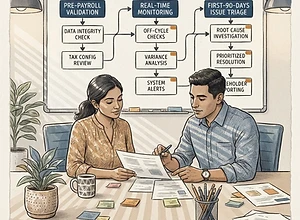
Dayforce Payroll Hypercare Failures: Why the First 90 Days After Go-Live Are Where Most Mid-Market Projects Break
Dayforce payroll hypercare failures happen in a predictable place — the 6 to 12 weeks between parallel payroll ending and the implementation partner stepping out. The failure modes are specific, the ownership is unclear, and the consequences reach employees on the first true production payroll. This guide covers what goes wrong, who owns resolution, and the 7-item checklist that prevents each failure mode before it costs you a real pay cycle.
Read more →
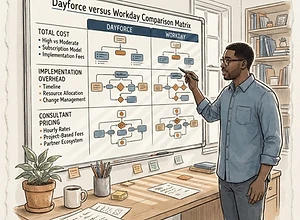
Dayforce vs Workday for Mid-Market: 2025–2026 Comparison
Updated July 2026. Dayforce and Workday are built for different buyers. For 200–5,000 employees, the choice has real consequences on total cost, hidden implementation overhead, and whether consultant pricing rates match the complexity you're buying.
Read more →
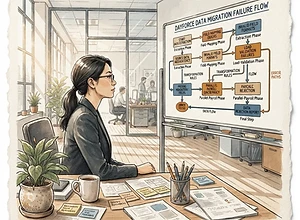
Dayforce Data Migration Failure: Specific Failure Modes and How to Prevent Them
Data migration is the highest-risk phase in a Dayforce implementation — and the failure modes are specific to each phase. This guide covers what goes wrong in extraction, field mapping, load validation, and parallel payroll, and how to prevent each failure before it reaches your go-live.
Read more →
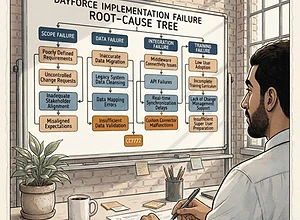
Dayforce Implementation Failure: 5 Ways to Avoid Them
Dayforce's Professional Services and Value-Added Services (VAS) are priced on time-and-materials for mid-market buyers — and the billing model itself is what produces the cost surprises. This guide walks through how PS/VAS is typically contracted and staffed, where hours tend to evaporate without producing equivalent value, and what a fixed-price consulting + hypercare engagement looks like for the same implementation work.
Read more →
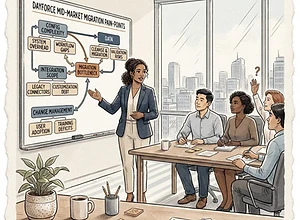
Dayforce Mid-Market Migration Pain Points: What Goes Wrong and How to Prevent It
Dayforce mid-market migrations fail in predictable ways. Underestimated configuration complexity, data migration breakdowns, integration scope gaps, and change management underinvestment account for most of what we clean up. Here is where implementations go wrong and how to set yourself up correctly.
Read more →
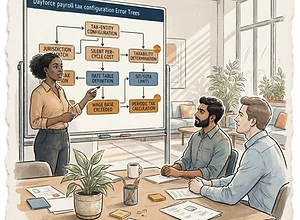
Dayforce Payroll Tax Configuration Errors: How to Find and Fix Them
Dayforce payroll tax misconfigurations silently cost mid-market companies thousands per payroll cycle. Here are the errors we see most often and how to audit your setup.
Read more →
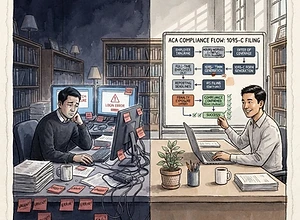
How to Avoid ACA Penalty Exposure in Dayforce: A Mid-Market Guide
The ACA employer mandate applies to mid-market companies with 50+ full-time employees — and the penalties for non-compliance add up fast. Here is how Dayforce configuration errors trigger penalty exposure, and how to find and fix them before your next 1095-C filing.
Read more →
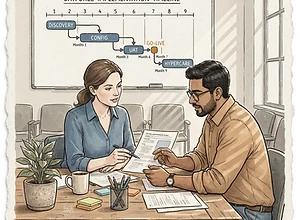
Dayforce Implementation Timeline: A Phase-by-Phase Guide
Mid-market companies evaluating Dayforce consistently ask the same question after the demo: "How long will this actually take?" The honest answer is 5–9 months for most organizations between 500 and 5,000 employees — with real variation based on integration complexity, data migration scope, and whether you have an experienced implementation partner.
Read more →
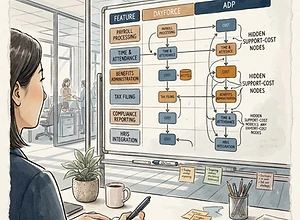
Dayforce vs ADP for Mid-Market: 2025–2026 Comparison
Updated for 2025–2026. ADP is the default choice for mid-market HCM — it requires no justification. But companies on ADP frequently pay more than they realize in hidden support costs, configuration gaps, and payroll risk that doesn’t show up in the license quote.
Read more →
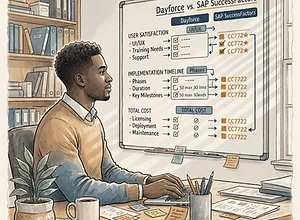
Dayforce vs SAP SuccessFactors for Mid-Market: 2025–2026 Comparison
SAP SuccessFactors holds 9% of the Cloud HCM market — but among mid-market companies (500–5,000 employees), it consistently underperforms on user satisfaction, implementation timeline, and total cost. Updated for 2025–2026 with the current migration landscape.
Read more →
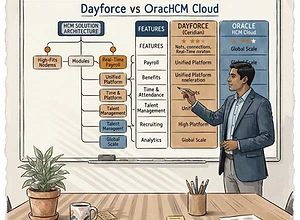
Dayforce vs Oracle HCM Cloud for Mid-Market: 2025–2026 Comparison
Updated for 2025–2026. Oracle HCM Cloud holds significant enterprise market share — but for mid-market companies (500–5,000 employees), it is frequently the wrong tool at the wrong price. Here is the honest comparison, including where Dayforce wins and where it doesn’t.
Read more →
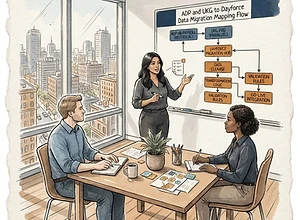
Dayforce Data Migration from ADP or UKG: What Actually Goes Wrong (2025–2026)
Updated 2025–2026. Dayforce data migration from ADP or UKG is where most mid-market implementations run into serious problems. Data mapping gaps, historical record loss, and parallel payroll failures are predictable — if you know what to look for before the migration starts.
Read more →
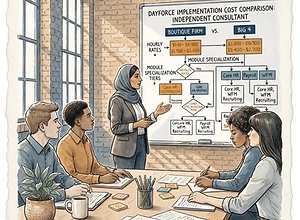
What Independent Dayforce Implementation Consultants Actually Cost (2025–2026)
Updated 2025–2026. Independent Dayforce implementation consultants hourly rates vary significantly based on experience, module specialization, and engagement structure. Here's what you actually pay, what you get for the money, and how boutique firms compare to Big 4.
Read more →
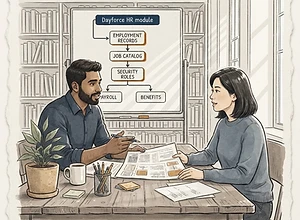
Dayforce HR Module Configuration: A Guide for Mid-Market HR Teams
The Dayforce HR module is the foundation everything else runs on — payroll, time tracking, benefits, and reporting all depend on data that originates here. Misconfigured employment records, job catalogs, and security roles create cascading errors that are expensive to trace and slow to fix. This guide covers how to get the core HR configuration right the first time.
Read more →
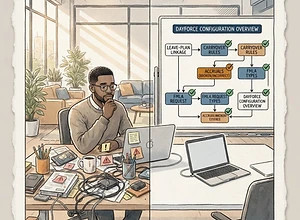
Dayforce Leave Management Configuration: What HR Teams Get Wrong
Dayforce leave management configuration is where the most invisible compliance risk lives. Leave plan linkage errors, carryover misconfiguration, and FMLA request type gaps don't surface until an employee needs to use their time — by which point the damage is already done. This guide covers what to get right before it matters.
Read more →

Dayforce Payroll Configuration: What Mid-Market HR Teams Need to Get Right
Dayforce payroll configuration decisions made during implementation have a long tail — pay group structure, earnings code sequencing, and GL mapping choices made in month two show up as year-end problems in month fourteen. This guide covers the configuration decisions that matter most and the shortcuts that cause the most damage.
Read more →
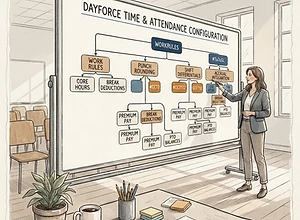
Dayforce Time and Attendance Configuration: A Mid-Market Guide
Dayforce time and attendance configuration is more interdependent than most teams realize going in. Work rules, punch rounding, shift differentials, and accrual integrations all interact in ways that create compliance exposure when configured independently. This guide covers the setup that matters and the mistakes that surface after go-live.
Read more →
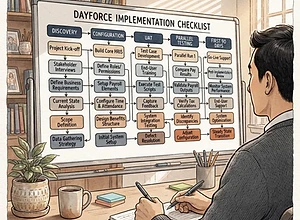
The Complete Dayforce Implementation Checklist for Mid-Market HR Teams
A Dayforce implementation has five distinct phases, and the gaps that cause go-live failures almost never happen where teams expect. This checklist covers what HR teams must own, what to validate before parallel testing, and what to prioritize in the first 90 days after go-live.
Read more →

Dayforce Benefits Enrollment Configuration for Mid-Market Open Enrollment
Dayforce benefits enrollment configuration is the difference between an open enrollment that runs smoothly and one that generates 200 help desk tickets. This guide covers plan setup, eligibility rules, enrollment windows, carrier connection configuration, and the testing process that prevents enrollment errors.
Read more →
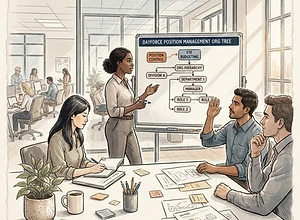
Dayforce Position Management Configuration: A Mid-Market Guide
Dayforce position management is one of the most consequential — and most commonly misconfigured — parts of the platform. This guide covers position control setup, FTE budgeting, org hierarchy design, and the configuration decisions that cause downstream payroll and reporting problems.
Read more →

Dayforce API Integration Best Practices for Mid-Market HR Teams
Dayforce API integration is how mid-market companies connect their HRIS to downstream systems — payroll processors, ERP platforms, time clocks, and custom business applications. This guide covers authentication, endpoint selection, error handling, and the architectural decisions that determine whether an integration is reliable or a recurring support burden.
Read more →
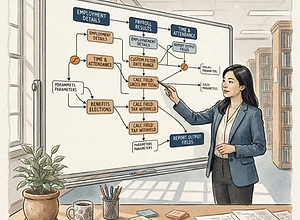
Dayforce Custom Report Builder Tips for Mid-Market HR Teams
Dayforce's custom report builder is powerful but poorly documented. This guide covers the data object model, parameter filters, calculated fields, and the delivery scheduling options that mid-market HR teams need to get useful reports out of Dayforce.
Read more →

Dayforce Year-End Payroll Compliance Checklist
Year-end payroll in Dayforce is one of the highest-stakes operational windows of the year. This checklist covers W-2 configuration, ACA reporting setup, balance verification, and the timing mistakes that cause last-minute fire drills for mid-market HR teams.
Read more →
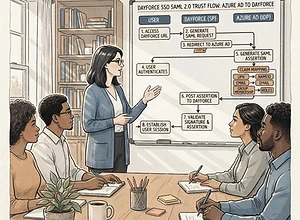
How to Set Up Dayforce SSO with Azure Active Directory
Setting up Dayforce single sign on with Azure Active Directory involves SAML 2.0 configuration, Azure app registration, and precise claim mapping. Here is the complete setup process with the pitfalls that cause silent authentication failures.
Read more →
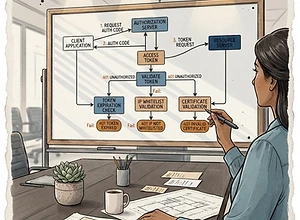
Troubleshooting Dayforce API Webhook 401 Unauthorized Errors
Dayforce API webhook calls returning 401 Unauthorized? Token expiration, IP whitelisting mismatches, and certificate validation failures are the three most common causes. Here is how to diagnose each one and fix it fast.
Read more →
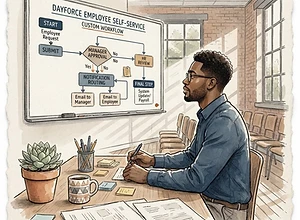
Configuring Dayforce Custom Workflows for Employee Self-Service
Dayforce employee self-service workflows are only as useful as their configuration. Here is how to set up custom approval chains, notification rules, and self-service tasks that your workforce actually uses — and the configuration mistakes that undermine all of it.
Read more →
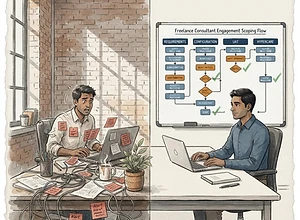
Finding a Freelance Dayforce Configuration Specialist for Mid-Market
Mid-market companies need Dayforce configuration expertise without the overhead of a large SI engagement. Here's what to look for in a freelance Dayforce configuration specialist, how to screen candidates, and what makes mid-market different.
Read more →

Dayforce Post Go-Live Optimization: What It Is and Why You Need It
Most Dayforce problems don't surface during go-live — they surface 60 to 90 days after, when the system meets real-world payroll cycles, real users, and edge cases nobody tested. Here's what post go-live optimization covers and why it matters.
Read more →
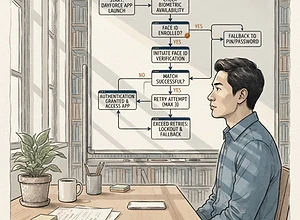
Dayforce Mobile App Face ID Login Loop: Causes and Fixes
Dayforce mobile keeps looping back to the Face ID prompt after a successful scan, never actually logging you in. Here's what's causing it and how to break out of the authentication loop on iOS and Android.
Read more →
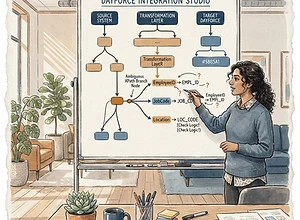
How to Fix 'Path Is Ambiguous' Errors in Dayforce Integration Studio
Dayforce Integration Studio is throwing a 'path is ambiguous' error and your integration won't run. The cause is almost always an XPath expression resolving to multiple nodes. Here's how to find it and fix it.
Read more →

Dayforce Wallet Restricted Account Fix (2026)
Your Dayforce Wallet account is showing as restricted and you can't access your earned wages. Here's what actually triggers a wallet restriction, how to resolve it, and when to escalate to payroll.
Read more →
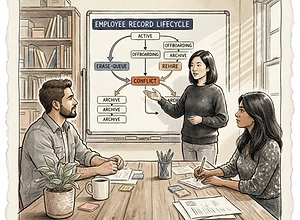
Employee Marked for Deletion But Has Active Status in Dayforce
When an employee lands in Dayforce's erase queue and then gets rehired or reactivated before processing completes, you're left with a conflict that blocks payroll and freezes the profile. Here's how to resolve it — and how to stop it from happening again.
Read more →
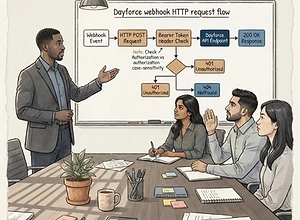
Why Your Dayforce Webhook Data Transmission Is Failing (Unauthorized/NotFound Fix)
Your Dayforce webhook returns "Unauthorized" or "NotFound" and nothing in the payload looks wrong. The problem is almost certainly in the bearer token header casing — and it's nowhere in the official docs.
Read more →